OUR STORY
Established in 2016, Te Hāhi (‘The Church’ or ‘The Faith’) was born in response to a need seen by a young ex-Police woman in Gisborne. Weary of having seen first-hand the brokenness that family harm caused, she approached her Area Commander with a radical idea: that the local Gisborne churches unite to support the Police in their response to family harm. With the support of several Gisborne churches, Te Hāhi was launched.
A similar idea had been explored in Rotorua, and following a God-led reconnection between two ex-Police colleagues and news of Gisborne’s success, the then Rotorua Area Commander and Rotorua Ministers caught the vision and Te Hāhi was launched in Rotorua in 2017.
Te Hāhi has continued to grow steadily across Aotearoa, New Zealand into new locations, with a formal partnership with NZ Police signed in 2021.
As each Te Hāhi location matures, the local Police partnership is complemented with other community opportunities to meet local need. Collectively, as churches sharing resources and volunteers, Te Hāhi is making a significant impact.
“Te Hāhi has made a real impact in our local community”
OUR VISION AND VALUES
We exist to bring hope to communities across Aotearoa, New Zealand.


“
To have Te Hāhi walk alongside us, not only provides hope for our Police staff that they’re not walking this journey alone, but equally, provides an opportunity to intervene for our people in the community.
”
KO WAI MāTOU
Download our booklet, Ko Wai Mātou - About Us, to read more about Te Hāhi and our impact.

““Te Hāhi’s approach whakapapas back centuries to the mahi of the church and it’s role in shepherding, protecting, tending to the needy, strengthening the weak, making provision, shielding, refreshing, restoring and leading by example.”
OUR TEAM
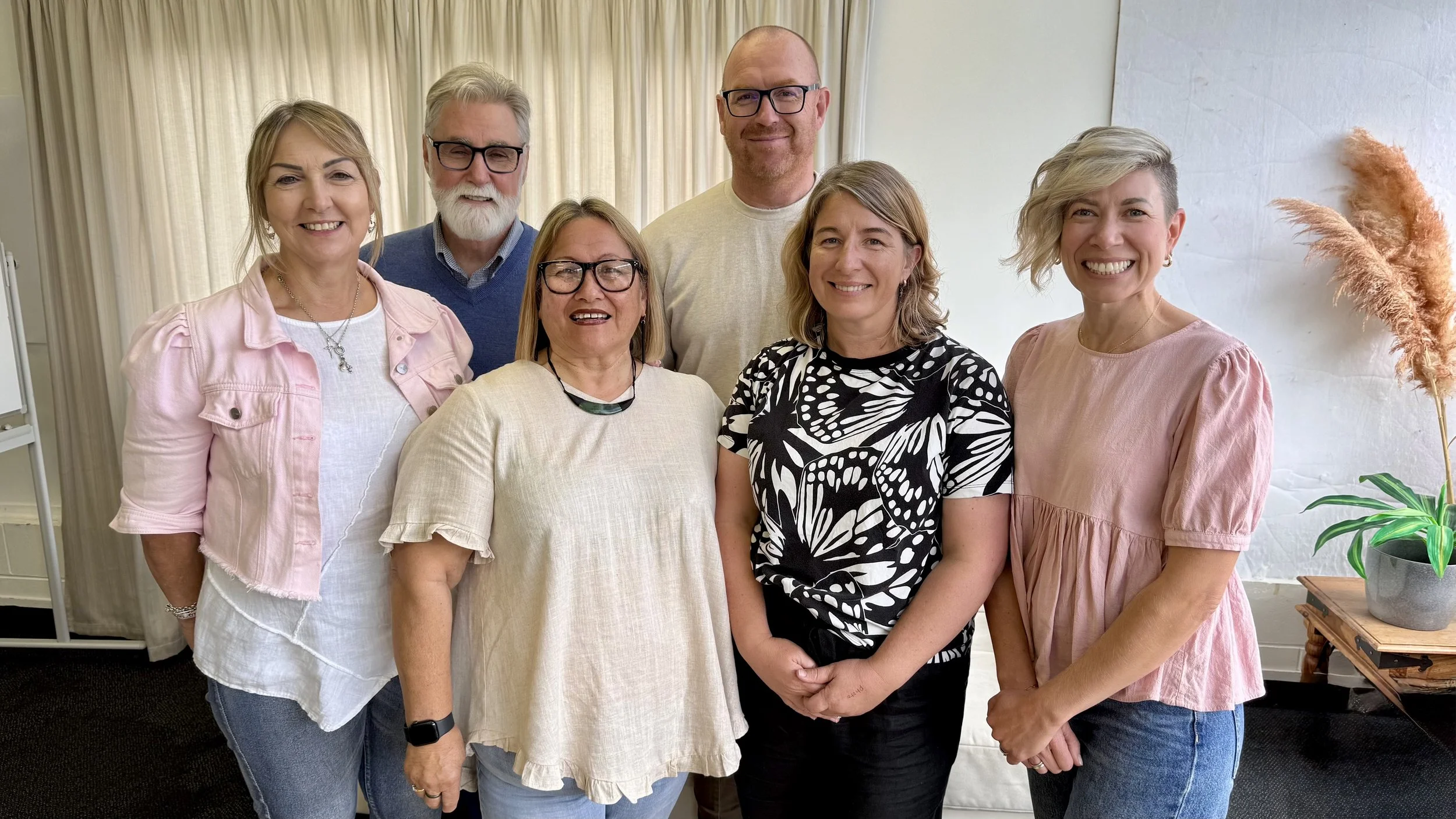
The Te Hāhi Aotearoa Board and Management
L-R: Robyn King (Board Member), Guthrie Boyd (Chair), Michelle Whitley (Board Member), Lincoln Martin (Board Member), Teri Walker (National Coordinator) and Debbie Simpson (Operations)
“I now see myself as a wahine toa”